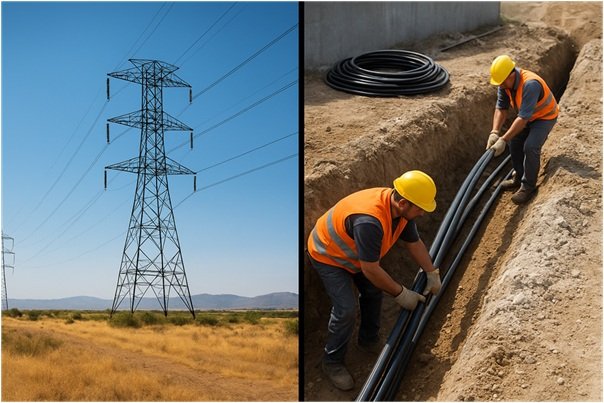
China’s rise in global industries often sparks conversation, but one sector where the country has firmly cemented its dominance is power cable production. From supplying its own massive domestic grid to exporting around the world, China has positioned itself as a reliable hub for cables that keep electricity flowing. Today, power cable manufacturers in china not only meet the needs of local infrastructure projects but also serve as key players in international markets.
The Foundation: Meeting a Growing Domestic Demand
China’s journey toward leadership in power cable production began with its rapid industrialization. As cities expanded and factories multiplied in the late 20th century, demand for electricity surged. This required a massive build-out of transmission lines and distribution networks. To support these projects, China invested heavily in developing its own cable manufacturing capabilities rather than relying solely on imports.
By the early 2000s, the country was producing cables at a scale that matched its infrastructure ambitions. Power cables were needed not just for cities but also for rural electrification programs, ensuring that even remote areas had access to electricity. This large-scale domestic demand created a strong foundation for the industry.
Scaling Through Technology and Investment
Another reason for China’s success is its consistent investment in technology and production efficiency. Local companies rapidly adopted modern manufacturing processes, including advanced extrusion techniques, precision insulation, and automated quality control systems. This allowed them to produce cables that met strict international standards for safety and performance.
In addition, government policies encouraged modernization. Subsidies, favorable financing, and support for research and development all contributed to the growth of cable technology. Over time, Chinese manufacturers were able to expand beyond basic low-voltage cables into complex, high-voltage and ultra-high-voltage (UHV) cables used for long-distance transmission.
Global Export Expansion
Once domestic needs were met, Chinese manufacturers began exporting aggressively. Asia, Africa, Europe, and the Americas became key markets. For many developing countries, Chinese power cables offered a cost-effective yet reliable option.
China also gained a competitive edge by bundling its cable exports with larger infrastructure projects. For example, when Chinese companies build power plants or transmission networks abroad, they often source cables directly from homegrown manufacturers. This integration has boosted global demand for Chinese-made products.
Innovation in High-Voltage Transmission
One of the standout achievements of China’s cable industry is its leadership in ultra-high-voltage transmission technology. With the country’s vast geography, transporting electricity efficiently from remote energy-rich regions to densely populated cities is a major challenge. Chinese engineers pioneered the use of UHV cables and transmission lines, which minimize power loss over long distances.
This innovation didn’t just solve domestic problems—it positioned China as a world leader in advanced cable technology. Today, Chinese companies supply high-voltage cables to projects across the globe, competing directly with long-established Western and Japanese manufacturers.
Challenges and Quality Improvements
Of course, growth has not been without challenges. In the early days, some international buyers questioned the durability and safety of Chinese cables. However, the industry has steadily improved its reputation by adopting global certifications such as ISO and IEC standards. Many top Chinese manufacturers now work closely with international partners to ensure compliance with strict regulations.
Another challenge lies in sustainability. Producing cables requires energy-intensive processes and raw materials like copper and aluminum. To address this, Chinese companies are increasingly investing in recycling programs and developing eco-friendly production methods.
The Role of Belt and Road Initiative
China’s Belt and Road Initiative (BRI) has also been instrumental in boosting its global cable market. Through this program, China invests in energy and infrastructure projects across Asia, Africa, and Europe. Naturally, these projects often rely on Chinese suppliers for essential materials, including power cables. This has further reinforced China’s role as a global supplier.
Looking Ahead: The Future of Power Cable Production in China
As renewable energy adoption accelerates worldwide, the demand for advanced power cables will only grow. Wind farms, solar parks, and offshore energy projects all require specialized cables that can withstand extreme conditions. Chinese manufacturers are already expanding their product lines to meet these needs.
Moreover, with the increasing focus on smart grids and energy efficiency, China’s cable industry is expected to continue innovating. Fiber optic integration, real-time monitoring systems, and next-generation insulation materials are just some areas where growth is anticipated.
Final Thoughts
China’s leadership in power cable production did not happen overnight. It was the result of strong domestic demand, heavy investment in technology, and strategic expansion into international markets. Today, China not only meets its own energy infrastructure needs but also supplies cables that help power the world. As global demand for electricity and renewable energy infrastructure rises, China’s role in the industry is set to become even more influential.